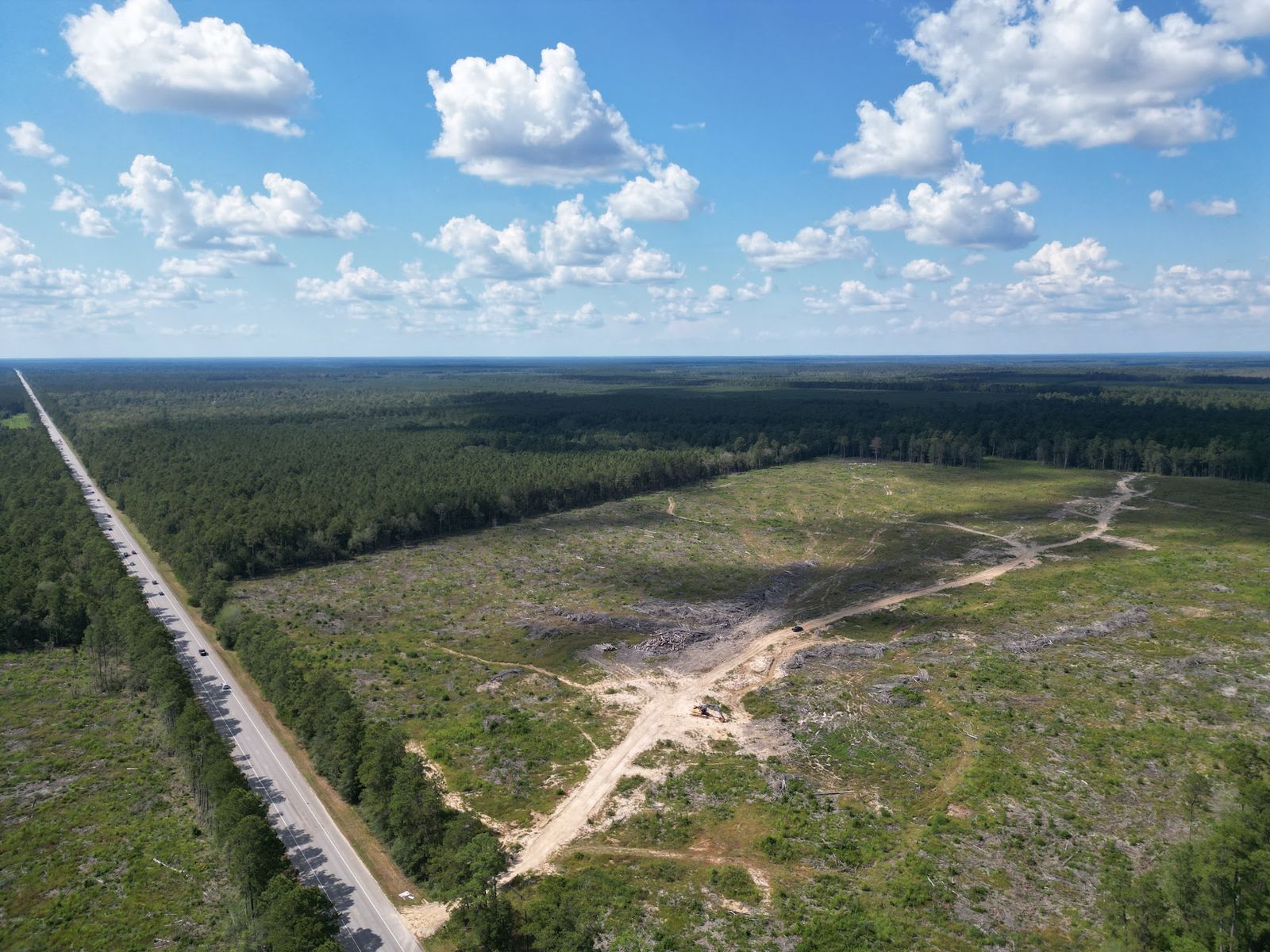
The listing price of a lot is rarely what it actually costs to make it buildable. On raw or lightly developed land near Houston, hidden costs — clearing, a building pad, a well and septic, utility runs, surveys, and ongoing MUD taxes — routinely add $30,000 to well over $100,000 on top of the purchase price. Knowing these before you buy is the difference between a smart land deal and a budget blown before the house starts.
We price these out with clients every week as their land guide. Here’s where the money hides.
Wooded, overgrown, or low-lying land has to be cleared and built up before a foundation goes down. Clearing an acre can run a few thousand dollars for light brush to $10,000+ for heavy tree cover. If the lot needs fill dirt to raise the pad above the drainage plane — common on flat Houston land — that’s more.
No municipal water or sewer means a well ($8,000–20,000+ depending on depth) and a septic system ($5,000–15,000+ depending on type and soil). An aerobic system on poor-percolating clay costs more than a standard one. Full detail is in Septic vs Sewer vs Water Well.
A new survey, a soil (geotechnical) test, and — on acreage — sometimes a new address and permits. Individually small, together a few thousand dollars you have to plan for before financing closes.
The Build Smart Playbook includes a land due-diligence checklist so none of these surprise you after closing.
Get the PlaybookMany Greater Houston communities sit inside a Municipal Utility District (MUD) that levies its own property tax to pay for the water and sewer infrastructure — sometimes adding a meaningful amount to your annual tax bill for years. Two lots a mile apart can have very different MUD rates. Always ask.
Before you decide a lot is affordable, put a real dollar figure next to each of these. It’s the fastest way to see whether a “cheap” acre is actually cheap.
Site work is the biggest — clearing, pad, and a well and septic on unserved acreage can add $30,000–100,000+. After that, long utility runs and MUD taxes surprise people most. See utilities & infrastructure explained.
A Municipal Utility District levies its own property tax to pay for community water and sewer infrastructure, on top of your regular taxes. Rates vary widely lot to lot and decline over time. On your monthly payment, a high MUD rate matters — always ask before you buy.
Consider two lots a buyer might weigh. Lot A is a raw acre in a rural part of Montgomery County listed at $120,000. Lot B is a served lot in a bring-your-own-builder community listed at $185,000. On sticker price, Lot A wins by $65,000. Now count the real path to a buildable lot. Lot A needs clearing and fill for a pad ($15,000), a well ($12,000), an aerobic septic ($12,000), a long electric run and driveway ($20,000), plus survey and permits. That is roughly $60,000 of site work before the house starts — and Lot A carries ongoing considerations Lot B’s buyer never thinks about. Suddenly the two lots are nearly even on total cost, and Lot B delivered it with far less time, risk, and hassle. The sticker price told you almost nothing.
Some of land’s hidden costs are not one-time site work but recurring line items on your budget for years. MUD taxes are the big one: many Greater Houston communities sit inside a municipal utility district that levies its own property tax to fund the water and sewer infrastructure, and rates vary widely from one community to the next before declining over time. On acreage, owning a well and septic means ongoing maintenance, testing, and eventual equipment replacement rather than a monthly utility bill. Neither is a reason to avoid a lot — they are simply numbers to get up front, because they shape your true monthly cost of ownership long after closing.
Add these up before you decide a lot is affordable. A fully served community lot at a higher sticker price can easily beat a “cheap” raw acre once site work is counted — which is exactly why we evaluate every lot before an offer. More in the Land & Location guide.
