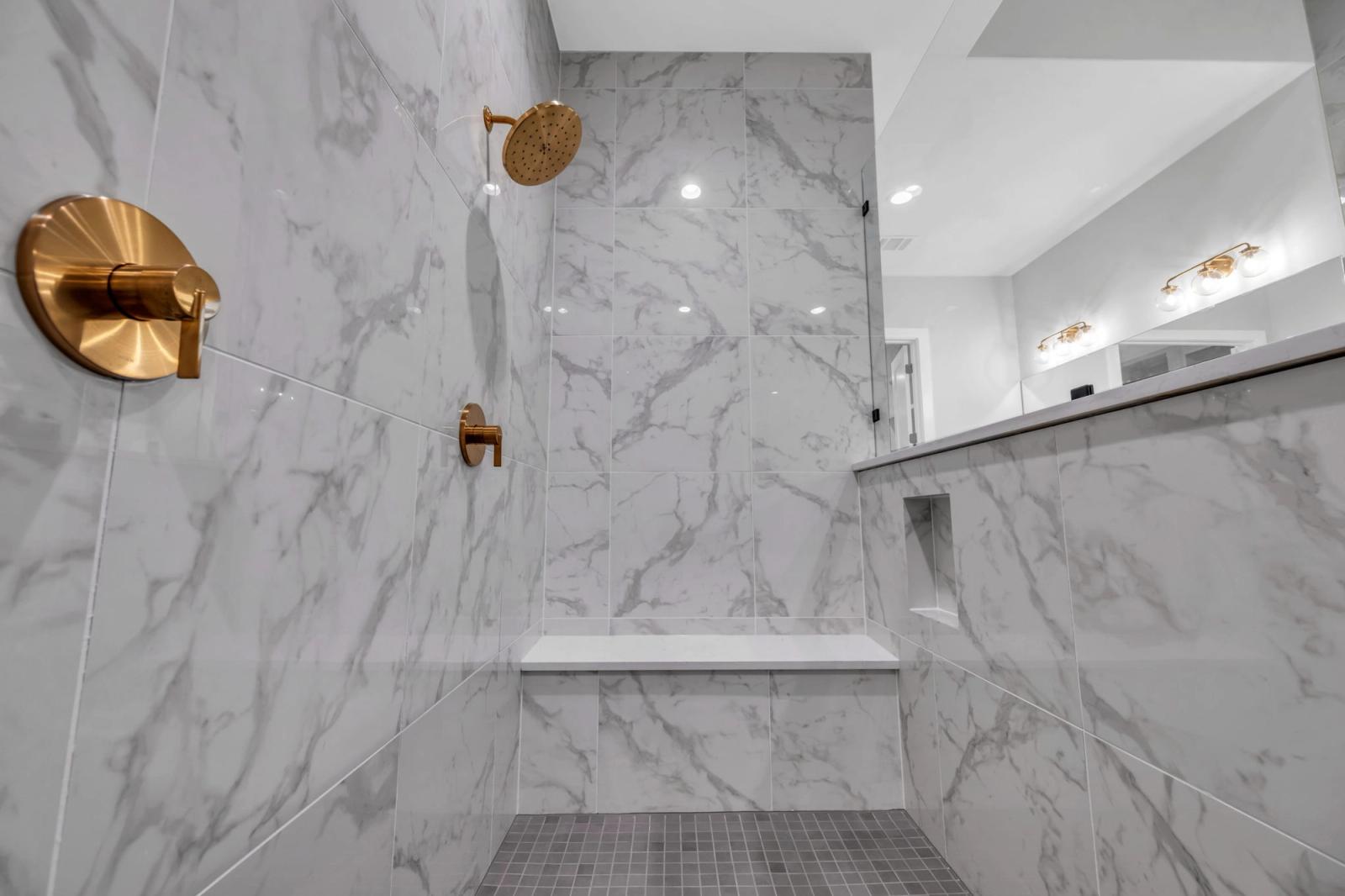
Once you break ground, your custom home moves through a predictable sequence: site work and the foundation first, then framing, then dry-in (roof, windows, exterior), then the mechanical systems inside the walls, and finally interior finishes. The early stages feel fast and dramatic — dirt to a standing frame in weeks — then the pace seems to slow as the detailed indoor work happens. Knowing the order keeps you oriented and tells you where your attention actually matters.
As the buyer’s guide, here’s what the first stretch after groundbreaking looks like.
After dry-in — roof on, windows in, exterior closed up — the work moves inside: plumbing, electrical, HVAC, insulation, drywall, then finishes. There’s less to see from the curb, but this is where the detail happens. It’s not slowing down; it’s getting precise. The full sequence is in construction phases explained.
Your job shifts from deciding to staying available and engaged. Respond quickly to questions, keep your selections on schedule, attend the check-ins your builder sets, and raise concerns early and calmly. You don’t need to be on site daily — you need to be reachable and decisive.
We help our buyers stay oriented and protected through every construction stage — so the build is exciting, not anxious.
Get Build SupportSite work and the foundation — clearing, grading, the building pad, utility rough-ins, then forming and pouring the slab (often post-tensioned on Houston clay). It’s a big, weather-sensitive milestone. See the full construction phases.
After dry-in — roof on, windows in, exterior closed — the work moves inside to plumbing, electrical, HVAC, insulation, drywall, and finishes. There’s less to see from the curb, but this is where the detail and much of the budget live. It’s getting precise, not slowing down.
Stay available and decisive — respond quickly to questions, keep selections on schedule, attend the check-ins your builder sets, and raise concerns early and calmly. You don’t need to be on site daily, just reachable. See staying involved without stress.
The opening stretch after groundbreaking is the most dramatic part of the whole build, and knowing its rhythm keeps you from misreading it. The first weeks are pure momentum: crews clear and grade the lot, set the building pad, and rough in utilities, then form and pour the foundation — a major, weather-sensitive milestone, often a post-tensioned slab given Houston’s clay. Then framing goes up fast, and for the first time you can physically walk your floor plan, standing in what will be your kitchen and looking out what will be your windows. It is the most exciting site visit you will make. After that comes dry-in — roof, windows, and exterior doors — which closes the home to weather and quietly shifts the whole project indoors.
Once the home is dried in, many buyers get anxious because the dramatic curb progress stops. From the street, the house looks finished on the outside and untouched for weeks. Inside, though, this is where the real work is happening: plumbing, electrical, and HVAC threading through the framing, then insulation, drywall, and the long finish stretch. There is simply less to see, not less getting done. In fact, this quieter phase is where much of your budget and most of the craftsmanship live. Trust the sequence, show up for the pre-drywall walk, and resist the urge to read a slow-looking week as a stalled project.
Your early site visits are exciting, and they are also useful if you know what to look at. At the foundation stage, you are mostly confirming the pour happened cleanly and on schedule; the real quality check here is your inspection, not your untrained eye. At framing, walk your actual floor plan and let the rooms register at full scale — this is the moment to speak up if a space feels wrong before it is finished, though structural changes are already narrowing. And plan to be present for the pre-drywall walk, which comes a bit later but is the single most valuable visit, when everything inside the walls is still visible and adjustable.
Between those milestones, your job is less about inspecting and more about staying reachable and decisive, so the build never waits on you. Show up for the moments that matter, respond quickly to the questions that come up, and let your inspection checkpoints and your builder handle the rest. That balance — present for the key stages, out of the way in between — is what keeps the exciting early stretch exciting rather than anxious.
Something will come up — a change you want, or one the build reveals. Handle it through proper change orders, lean on your contingency, and keep perspective. This is the part you’ve been waiting for. Full guide: Groundbreaking to Move-In.