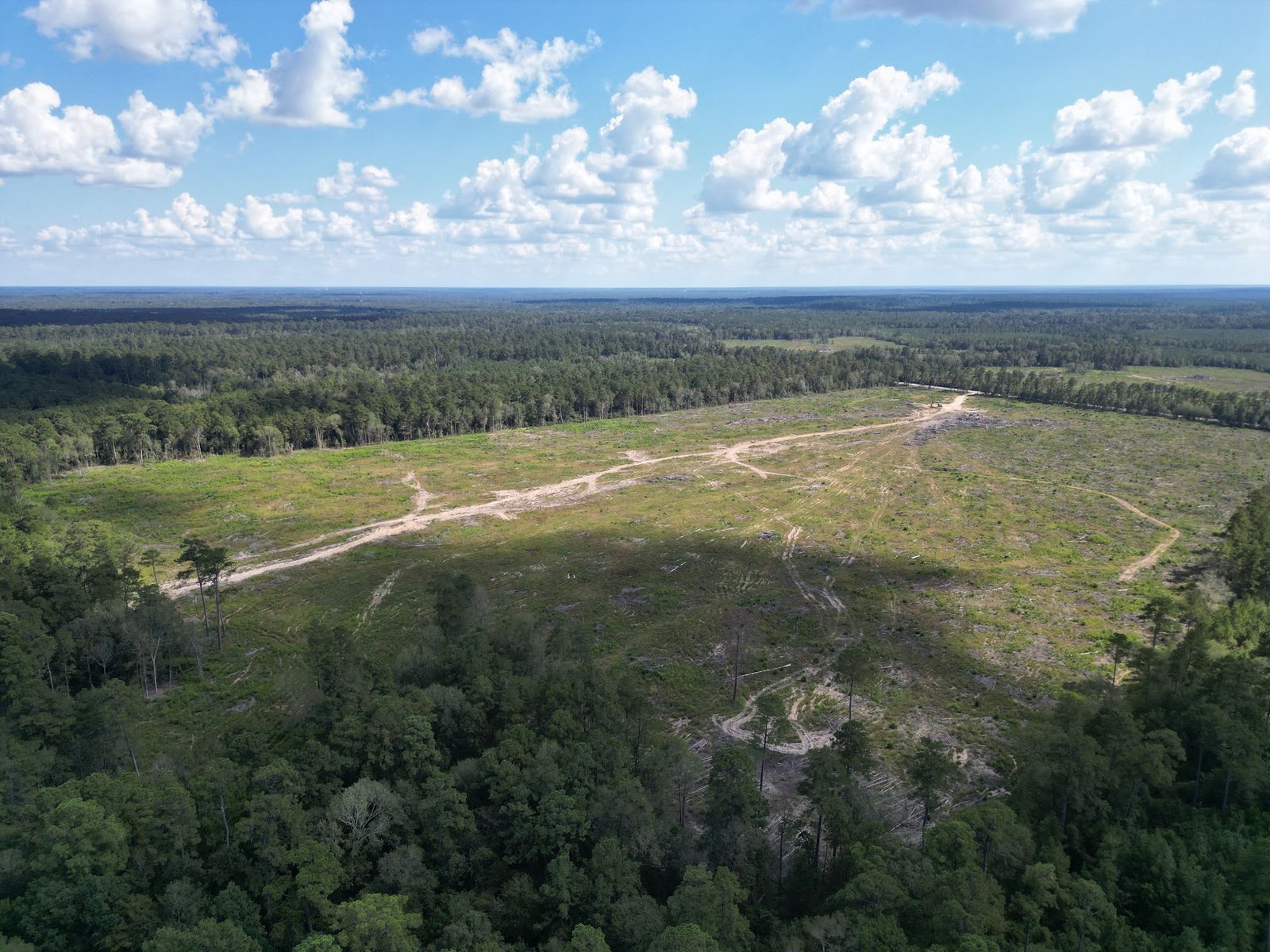
The best areas to buy land for a custom home near Houston depend on what you want, but a handful of submarkets do most of the building: Montgomery County (Magnolia, Montgomery, Willis, Conroe) for acreage and lake access, northwest Harris and Waller (Cypress, Tomball, Hockley) for land closer to the city, and Fort Bend (Fulshear, Simonton) to the west. Each trades price against commute, schools, and how much land your money buys.
We work land across all of these as the buyer’s land guide. Here’s the honest lay of the land.
Magnolia, Montgomery, and Willis are where a lot of Houston custom building happens: real acreage, strong school districts, Lake Conroe nearby, and a genuine country feel still within reach of The Woodlands and I-45. Prices have climbed, but you can still find usable acreage here, and the bring-your-own-builder communities are excellent.
Conroe offers everything from close-in lots to lakefront acreage. It’s the gateway to Lake Conroe living — see lakefront building considerations if the water is the draw — and it balances value against access as well as anywhere in the region.
Fulshear and the Simonton area have become a magnet for buyers who work on the west side or in the Energy Corridor and want space with strong schools. Land is tighter and pricier than the northwest, but the location is hard to beat for that commute.
Tell us your county, acreage, and budget and we will send matching lots — including ones that never hit the public sites.
Get Area Land AlertsMontgomery County is the most popular for acreage custom builds — Magnolia, Montgomery, and Willis combine real land, strong schools, and Lake Conroe access within reach of The Woodlands and I-45. Fort Bend (Fulshear) leads on the west side, and Waller County offers more land for the money to the northwest.
Generally the farther northwest and north you go — Grimes County and rural parts of Waller and Montgomery — the more acreage your dollar buys, in exchange for a longer commute and bringing your own utilities. See what $100K–$300K gets you in land.
Magnolia, Montgomery, Tomball, and parts of Cypress and Fulshear are consistently strong on schools and are where many of our building clients concentrate. Always confirm the specific school zoning for a lot, since boundaries can split even nearby parcels.
If there is a center of gravity for custom building around Houston, it is the northern corridor running from Tomball and Magnolia up through Montgomery, Willis, and out toward Conroe and Cold Spring. This is where genuine acreage still exists within reach of jobs and amenities, where the school districts stay strong, and where Lake Conroe adds both lifestyle and long-term value. Builder Connect works this corridor closely, and it is where much of our land activity concentrates — from developed bring-your-own-builder communities to gated acreage. The trade as you move north and west is a longer commute in exchange for more land and more freedom, which is exactly the trade many custom buyers are happy to make.
Rather than asking which area is "best" in the abstract, weigh each against your own non-negotiables. Commute and job location usually anchor the decision — the west side pulls buyers toward Fulshear and Simonton, while north-side and Woodlands-area workers lean toward Montgomery County. Then layer on schools, since boundaries can split even neighboring parcels, and confirm zoning for any specific lot. Finally, account for true cost, not sticker price: a served community lot in Cypress and a raw acre in Grimes County can look similar on price and diverge by tens of thousands once utilities and site work are counted.
Rather than chasing a single "best" area, start from your own non-negotiables and let them narrow the map. Commute and job location usually anchor the decision — west-side workers gravitate to Fulshear and Simonton, while north-side and Woodlands-area workers lean toward Montgomery County and Magnolia. Layer schools on next, confirming the zoning for any specific lot since boundaries can split neighboring parcels. Then weigh how much land you want against how far out you are willing to live, since acreage generally grows cheaper the farther northwest you go. Finally, judge on true cost rather than sticker price, because a served community lot and a raw acre can look similar on price and diverge sharply once utilities and site work are counted.
There is no single best area to buy land near Houston — only the best area for your commute, your schools, your acreage needs, and your budget. Start from those non-negotiables, judge lots on true cost rather than sticker price, and evaluate any specific parcel carefully before you buy. Do that, and whether you land in Magnolia, Montgomery, Cypress, or farther out, you will have bought the right land for the home you want to build.
Start with your non-negotiables — commute, schools, acreage, lake — then let price sort the rest. Don’t over-index on sticker price alone; a lot’s true cost after utilities and site work varies a lot by area. Once you’ve got a target, evaluate the specific lot before you buy. The Land & Location guide pulls it all together.
