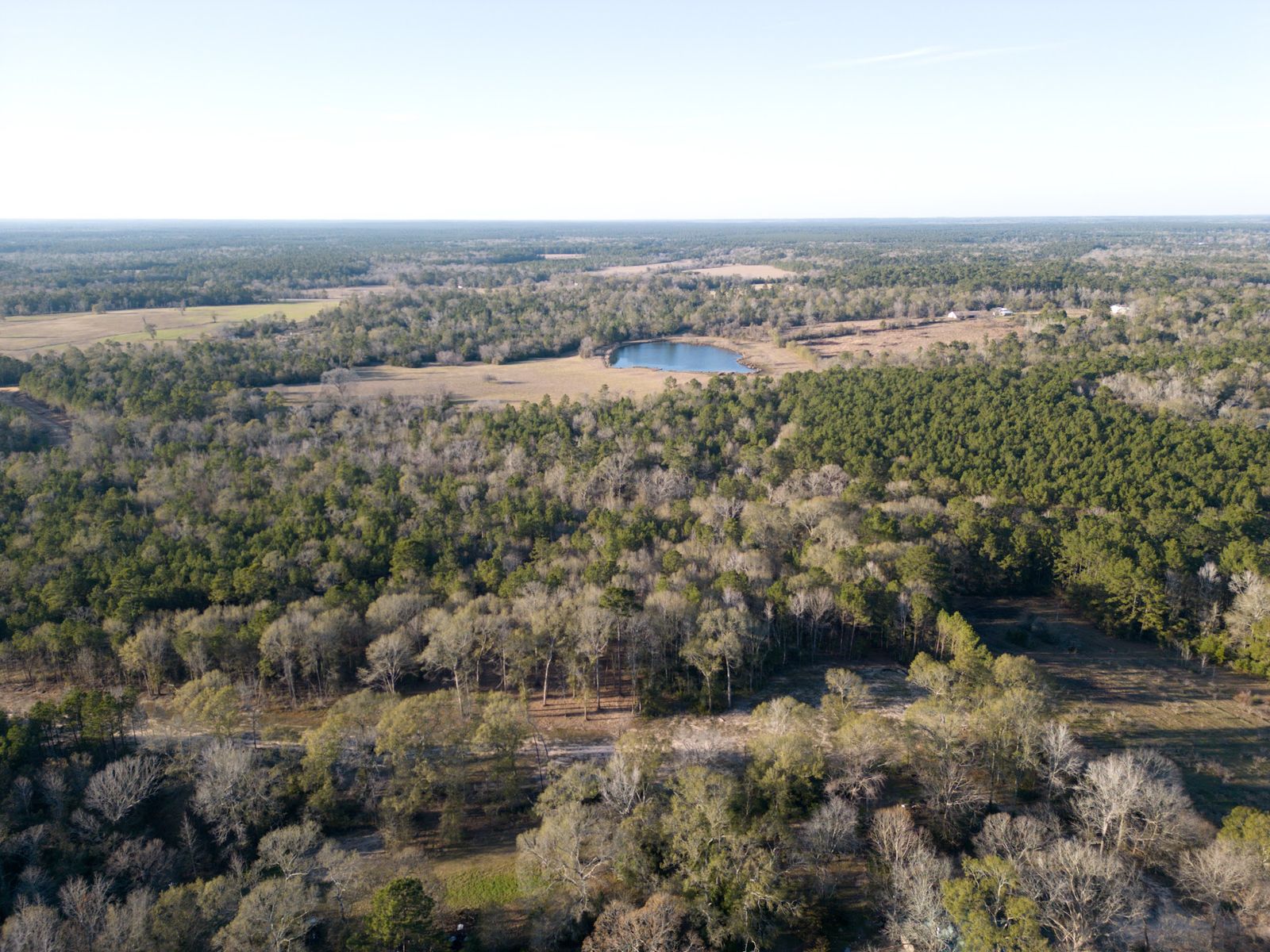
A land budget of $100,000 to $300,000 buys very different things depending on where you look around Houston. At the low end you’re looking at a quarter-acre to an acre in a developed community, or a few raw acres well out from the city. At the high end, $300,000 can buy 5 to 10+ acres in a desirable part of Montgomery County, or a premium homesite in a gated community. Location, acreage, and how developed the lot is are the three dials, and moving any one of them changes what your money buys.
We help buyers spend a land budget wisely every week as their land guide. Here’s an honest, area-by-area picture of what each tier gets you — remembering that the sticker price is only part of the true cost of land.
At this level you’re usually choosing between a smaller developed lot close in and more raw acreage farther out. In growing Northwest Houston and parts of Cypress and Tomball, $100K can land a quarter- to half-acre subdivision or bring-your-own-builder lot with utilities at the street — meaning lower site costs later. Push out toward Grimes County or rural Montgomery County and the same money can buy several raw acres, but you’ll bring the well, septic, and utilities yourself.
This is the sweet spot for a lot of custom buyers. In Montgomery, Magnolia, and Willis, $200K opens up genuinely usable acreage — often 1 to 5 acres — with good schools and Lake Conroe within reach. In more established or amenitized communities, it buys a premium lot with the infrastructure already handled. This tier is where you can realistically get the acre-plus feel without pushing an hour past the city.
At $300K you have real options: 5 to 10+ acres in a sought-after part of Montgomery County, a large lakefront or lake-access lot on Conroe, or a marquee homesite in a gated acreage community. This is also the tier where exclusive, harder-to-find land lives — the kind of property that often trades quietly rather than on the public sites. Some of the best of it never gets advertised at all, which is exactly why we keep private land alerts running for our buyers.
Raw land is cheaper to buy and often more expensive to build on. Once you add a well, septic, a driveway, clearing, and long utility runs, a “cheap” acre can cost more all-in than a served community lot. Always compare the total cost to a buildable lot, not the sticker price.
There’s no fixed ratio, but many custom buyers aim to keep land at roughly 20–30% of their total project so the build itself isn’t squeezed. The right split depends on your priorities — see the true cost of building to balance the two.
Generally, the farther northwest and north you go — Grimes County, rural Montgomery County, parts of Waller — the more acreage your dollar buys. The trade is commute and bringing your own utilities. Montgomery and Magnolia sit in the middle: real acreage, still-strong schools, reasonable access.
Tell us your number and your must-haves, and we’ll send real lots — including off-market ones — that fit.
Get Matched to LandThe reason a $200,000 budget can buy a quarter-acre in one place and five acres in another comes down to three dials that move independently. The first is how developed the lot is: a served community lot with water, sewer, and utilities at the street costs more per acre but far less to build on, so the raw acre’s apparent savings often disappear into site work, wells, and utility runs. The second is distance from the city: every fifteen minutes farther out generally buys more land for the money, in exchange for a longer commute. The third is restrictions: unrestricted acreage and gated communities price very differently even side by side, because you are paying for freedom in one case and for amenities and protection in the other. Understanding which dial you are turning is what lets you spend a land budget wisely instead of just chasing the most acres.
Whatever your number, the goal is to spend it on the right lot for your build, not simply the most acres you can get. A cheaper raw acre that needs a well, septic, a long utility run, and heavy site work can end up costing more all-in than a pricier served lot, so always compare the total cost to a buildable lot rather than the sticker price. Weigh how much land you genuinely need against how far out you are willing to live, since distance is the main dial that trades commute for acreage. And match the lot to your build type and timeline — acreage for a full custom vision, a served community lot for a faster, simpler path. Spend against those priorities and a modest budget can buy exactly the right foundation for your home.
Whatever your budget, spend it on the right lot for your build, not just the most acres. Start by evaluating any lot before you buy, and see the full sequence in the Land & Location guide.
