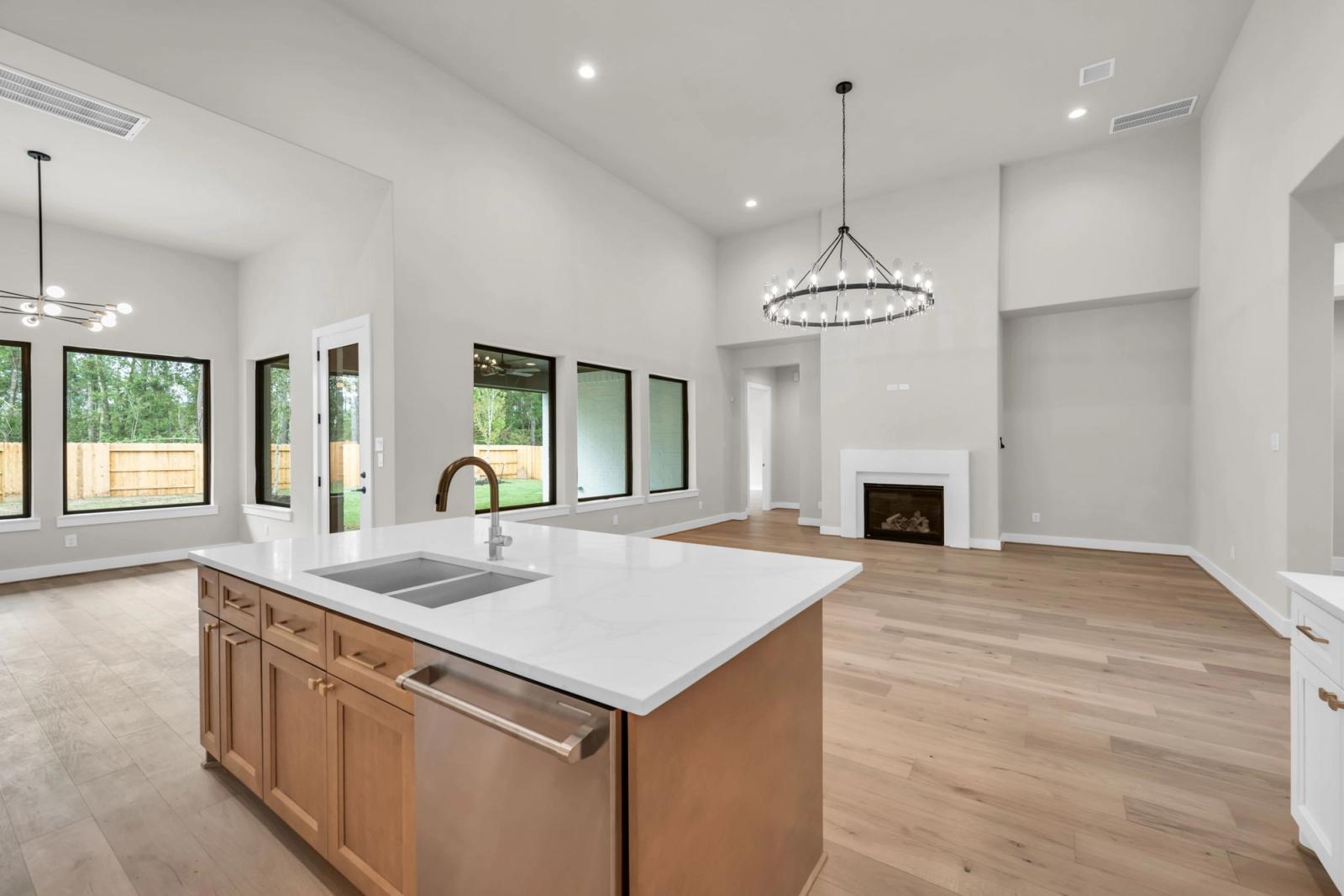
Choosing an architectural style for your custom home is mostly about taste, but it also has to fit three practical things: your land, your budget, and any community architectural guidelines. The popular Houston-area styles — modern farmhouse, Texas Hill Country, traditional brick, transitional, and contemporary — each carry different costs and suit different lots. Pick a style you love that the site and the rules can actually support.
As the buyer’s guide, here’s how we help clients land on a direction.
Some styles simply sit better on certain lots — a low Hill Country profile on a rolling acre, a farmhouse on open land. And in a deed-restricted community, the architectural review guidelines may dictate materials, rooflines, and colors, so confirm what’s allowed before you fall for a look you can’t build there.
Complex rooflines, lots of stone or masonry, and intricate detailing all cost more than clean, simple forms — which ties directly into structural vs cosmetic decisions. You can get the feel of a style without every expensive element; a good builder helps you spend where it shows.
Tell us your style and your land and we will show you what’s realistic — and what it costs to build.
Explore Design IdeasModern farmhouse remains hugely popular, along with Texas Hill Country (stone and stucco, low rooflines), traditional brick, and cleaner transitional and contemporary looks. Farmhouse and Hill Country sit especially well on acreage, while traditional brick is often the safest for resale in established communities.
Yes. Complex rooflines, heavy stone or masonry, and intricate detailing cost more than clean, simple forms. You can capture the feel of a style without every expensive element — a structural vs cosmetic mindset helps you spend where it shows.
Not always. Community guidelines may dictate materials, rooflines, and colors, so confirm what the architectural review allows before you commit to a look you can’t build there.
A handful of styles do most of the work around Houston, and each sits better on some lots and budgets than others. Modern farmhouse remains hugely popular — board-and-batten, metal accents, clean lines — and it looks right at home on acreage. Texas Hill Country, with its stone and stucco and low rooflines, suits land with a view and a natural setting. Traditional brick is timeless and often the safest choice for resale in established communities. Transitional and contemporary styles offer cleaner, more current lines for buyers who want something modern. The point is not that one is best, but that your style should fit your taste, your land, and your budget together — a low Hill Country profile on a rolling acre, a farmhouse on open land, brick in a traditional neighborhood.
Two practical realities should shape your style choice. First, style affects cost: complex rooflines, heavy stone and masonry, and intricate detailing all cost more than clean, simple forms, so you can capture the feel of a style without every expensive element — a good builder helps you spend where it shows. Second, in a deed-restricted community, the architectural review guidelines may dictate materials, rooflines, and colors, so confirm what is allowed before you fall for a look you cannot build there. The homes that age best commit to a coherent style inside and out rather than mixing three, then let the selections and floor plan support that single direction.
The homes that age the best commit to one architectural language and carry it consistently, inside and out, rather than mixing three half-styles that never quite resolve. Once you pick a direction — modern farmhouse, Hill Country, traditional, transitional — let it guide the decisions downstream: the rooflines and materials on the exterior, and then the selections and finishes on the interior, so the trim, cabinetry, lighting, and hardware all speak the same dialect. That coherence is what makes a home feel designed rather than assembled, and it is largely free, since it costs no more to choose finishes that belong together than ones that clash.
It also pays to sanity-check your chosen style against your specific lot and your budget one more time before you commit. A style you love that fights the land, or that leans on expensive elements you cannot fully fund, is worth adjusting now rather than compromising halfway through. A good builder can show you how to capture the feel of a style without every costly detail, so you get the look you wanted at a number you can actually build.
The homes that age best commit to a style inside and out rather than mixing three. Choose a direction, then let your selections and floor plan support it. Full guide: Builder Selection & Design.