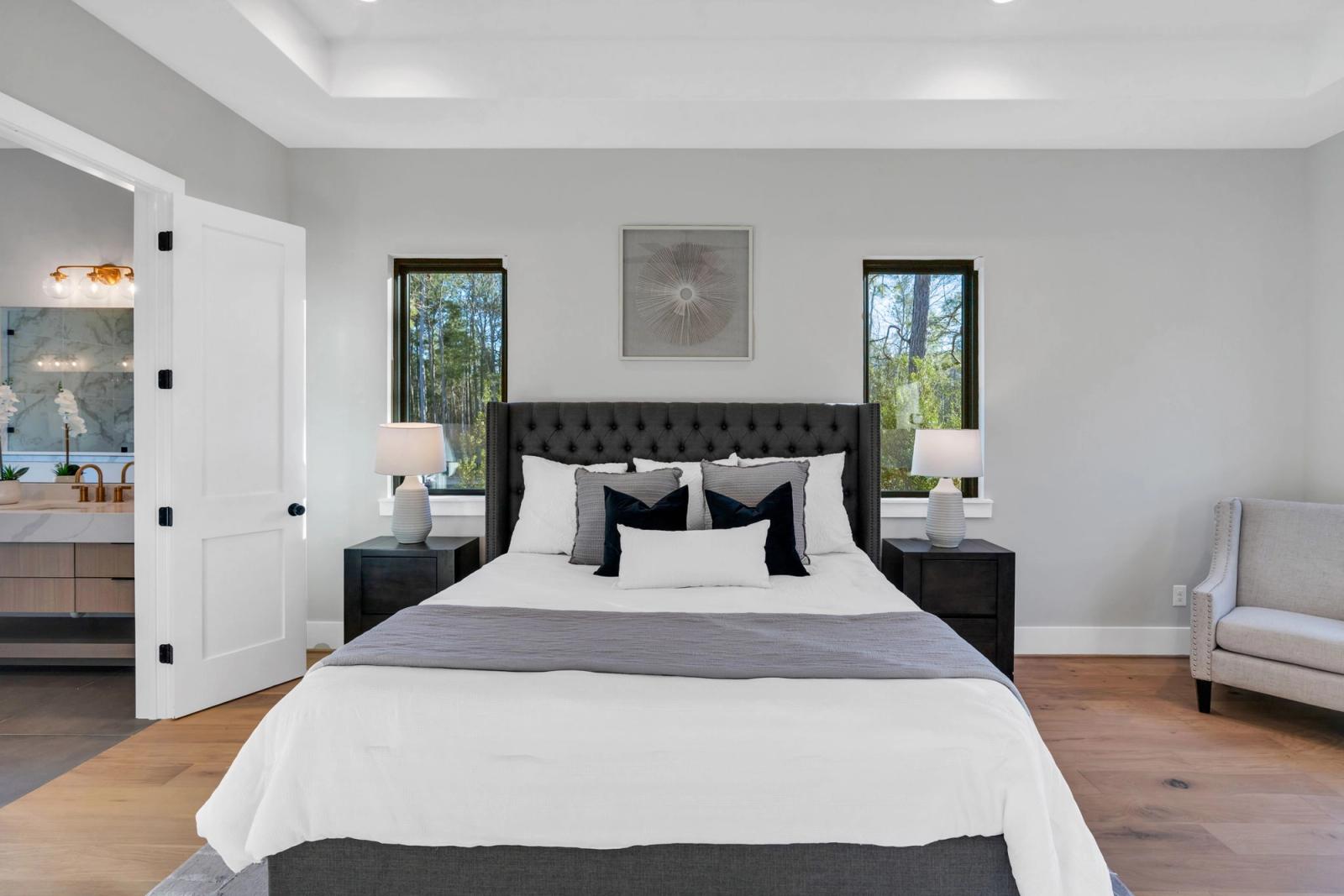
The selections process is where you choose all the finishes that make your custom home yours — flooring, cabinets, countertops, tile, plumbing and lighting fixtures, paint, hardware, and appliances. It’s the most fun and the most dangerous part of building, because it’s where an inspiring showroom and a hundred small “just a little nicer” upgrades quietly push you past budget. Understanding how selections work — and how allowances control them — is how you enjoy this stage instead of dreading the total.
As the buyer’s guide, here’s what to expect.
Your builder gives you allowances — budgeted dollars for each finish category — and you make choices within or beyond them. Pick something at or under the allowance and you’re on budget; go above and the difference is added to your cost. Selections usually happen over several weeks, often with a designer, sometimes room by room and category by category.
We help buyers set realistic allowances up front and stay on budget through selections — before the overages pile up.
Plan Your SelectionsSelections are all the finish choices that make the home yours — flooring, cabinets, countertops, tile, plumbing and lighting fixtures, paint, hardware, and appliances. They usually happen over several weeks, often with a designer, and are made within the builder’s allowances.
Low allowances, upgrade momentum (nicer counters lead to nicer tile lead to nicer fixtures), and decision fatigue. Know your allowances before you shop, track a running total, and prioritize the spaces you touch daily. See budgeting for upgrades & changes.
Set a specific upgrade budget in advance, spend where you see and touch it (kitchen, primary bath), and save on the rest. Favor upgrades that are hard to change later over ones you can swap in a few years — the structural vs cosmetic rule.
Selections is the most fun stage of building and the most dangerous to your budget, and the two facts are related. You walk into inspiring showrooms and make a long run of choices — flooring, cabinets, counters, tile, plumbing and lighting fixtures, paint, hardware, appliances — usually over several compressed weeks, often with a designer. Three forces push you over budget. Low allowances, if your builder set them lean to make the bid look cheap, turn ordinary choices into overages. Upgrade momentum builds as nicer counters lead to nicer tile lead to nicer fixtures, each jump small and the sum large. And decision fatigue, from making hundreds of choices in a short window, leads to rushed or regretted ones. Knowing these forces in advance is how you enjoy the stage instead of dreading the total.
You do not have to strip the joy out of selections to keep them on budget. Know your allowances before you shop, and track a running total as you go so you always know where you stand. Prioritize deliberately: spend where you touch and see it every day, like the kitchen and primary bath, and hold the line where you will not notice. Decide which upgrades are genuinely worth it now versus easy to change later — favoring the things that are hard to redo over finishes you can swap in a few years. That structure lets you splurge where it matters to you and save where it does not, which is a far better experience than either blowing the budget or denying yourself everything.
Walk into selections with a plan and the stage becomes fun instead of overwhelming. Before you shop, get your allowance figures in hand so you know your baseline for each category. Decide your priorities in advance — the two or three spaces where you want to spend, usually the kitchen and primary bath, and the places where you will happily hold the line. Set an upgrade budget on top of your allowances and track a running total as you make choices, so you are never guessing where you stand. And pace yourself through the decisions rather than cramming them, because decision fatigue is what produces the rushed, regretted, or overspent choices. Structure up front is what lets you enjoy the most personal stage of building without dreading the total at the end.
Spend your real money on the things that are hard to change — layout, structure, built-ins — and go easier on finishes you can swap in a few years. That’s the heart of structural vs cosmetic decisions. Keep selections aligned with your architectural style so the home reads as one thing. Full guide: Builder Selection & Design.
